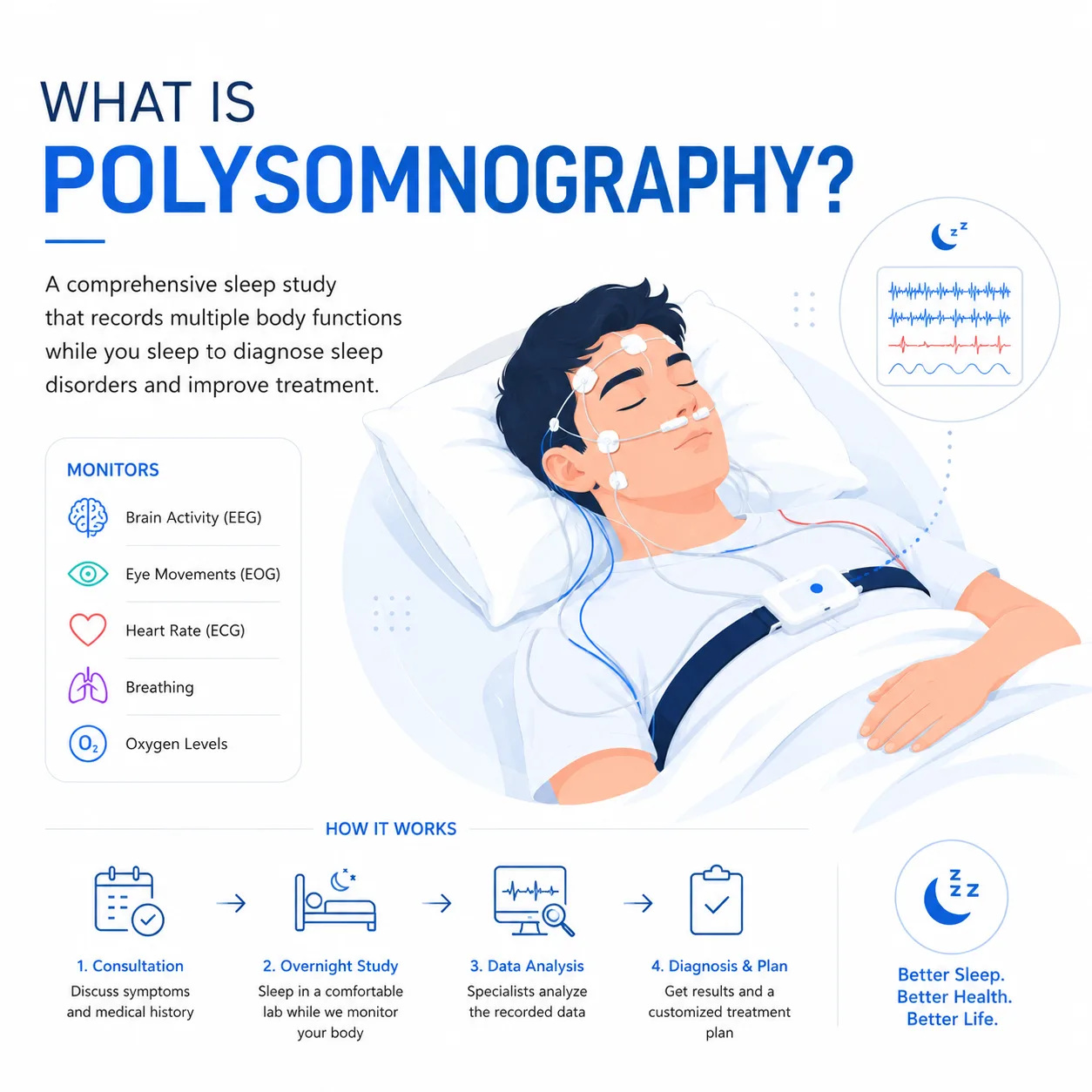
Sleep plays a vital role in maintaining physical health, mental well-being, memory, and overall quality of life. However, millions of people experience sleep-related problems without realizing that an underlying medical condition may be affecting their rest. A Polysomnography (PSG) test, commonly known as a sleep study, is one of the most reliable diagnostic tests used to evaluate sleep disorders. It records multiple body functions while you sleep, helping sleep specialists identify the root cause of disturbed sleep and recommend the most effective treatment plan.
Whether you experience loud snoring, excessive daytime sleepiness, breathing pauses during sleep, restless nights, or unexplained fatigue, a polysomnography test provides detailed insights into your sleep health.
What Is Polysomnography?
Polysomnography is a comprehensive overnight sleep study that continuously monitors several physiological activities while you sleep. Unlike a simple sleep tracker or smartwatch, this medical-grade diagnostic test records brain activity, breathing patterns, oxygen levels, heart rhythm, body movements, muscle activity, and eye movements throughout the night.
The collected information allows sleep specialists to accurately diagnose various sleep disorders and determine their severity. Depending on the patient's condition, the test may be performed in a sleep laboratory or, in selected cases, at home using advanced portable monitoring equipment.
Why Is a Polysomnography Test Recommended?
Your doctor may recommend a sleep study if you experience symptoms that suggest an underlying sleep disorder. Early diagnosis can help prevent long-term health complications and improve overall quality of life.
Common reasons for undergoing polysomnography include:
- Loud or chronic snoring
- Witnessed pauses in breathing during sleep
- Excessive daytime sleepiness
- Morning headaches
- Difficulty staying asleep
- Frequent nighttime awakenings
- Restless leg symptoms
- Unusual movements during sleep
- Sleepwalking or abnormal sleep behaviors
- Persistent fatigue despite adequate sleep
What Does a Polysomnography Test Monitor?
During the sleep study, specialized sensors record several body functions simultaneously to provide a complete picture of your sleep.

Brain Activity (EEG)
Measures electrical activity in the brain to identify different stages of sleep and detect abnormalities.

Eye Movements (EOG)
Tracks rapid eye movements to identify REM sleep, an important phase associated with dreaming and memory consolidation.

Muscle Activity (EMG)
Records muscle movements, helping diagnose disorders such as restless legs syndrome and REM sleep behavior disorder.

Heart Activity (ECG)
Monitors heart rate and rhythm throughout the night.

Breathing Patterns
Evaluates airflow through the nose and mouth while monitoring breathing effort.

Blood Oxygen Levels
Measures oxygen saturation to identify episodes of oxygen desaturation commonly seen in obstructive sleep apnea.

Body Position
Tracks sleeping positions and repetitive leg or body movements that may disturb sleep.
Conditions Diagnosed Through Polysomnography
A polysomnography test helps diagnose several sleep-related conditions, including:
- Obstructive Sleep Apnea (OSA)
- Central Sleep Apnea
- Mixed Sleep Apnea
- Chronic Snoring
- Restless Legs Syndrome
- Periodic Limb Movement Disorder
- REM Sleep Behavior Disorder
- Narcolepsy (with additional testing)
- Parasomnias
- Unexplained excessive daytime sleepiness
Early diagnosis allows timely treatment, reducing the risk of cardiovascular disease, diabetes, stroke, and impaired daily functioning.
What Happens During the Sleep Study?
The procedure is simple, painless, and non-invasive.Small sensors are gently placed on your scalp, face, chest, legs, and fingers using medical-grade adhesive. These sensors continuously record your body's physiological activities while you sleep naturally. The equipment does not interfere with breathing or normal sleep.
Throughout the night, trained sleep technologists monitor the recordings to ensure accurate data collection. Once the study is completed, sleep specialists analyze the information and prepare a detailed diagnostic report.
How To Prepare for a Polysomnography Test?
Preparing for your sleep study is straightforward. Following a few simple instructions helps ensure accurate results.
Patients are generally advised to:
- Maintain their regular sleep schedule before the test
- Avoid caffeine or alcohol on the day of the study
- Inform the doctor about any medications being taken
- Wash hair without applying gels or oils
- Wear comfortable nightwear
- Bring essential personal items if staying overnight
Your healthcare provider may provide additional instructions depending on your medical condition.
Benefits of a Polysomnography Test
A comprehensive sleep study provides valuable clinical information that cannot be obtained through symptoms alone.
Benefits include:
- Accurate diagnosis of sleep disorders
- Identification of breathing abnormalities
- Personalized treatment planning
- Better management of obstructive sleep apnea
- Improved sleep quality
- Reduced risk of long-term health complications
- Enhanced daytime energy and concentration
- Better cardiovascular health
Is Polysomnography Safe?
Yes. Polysomnography is a safe, painless, and non-invasive diagnostic procedure suitable for adults, elderly individuals, and children when medically indicated. The sensors only record body activity and do not deliver electricity or medications.
Most patients adapt quickly to the monitoring equipment, allowing specialists to collect sufficient data for diagnosis.
Frequently Asked Questions
How long does a polysomnography test take?
Most overnight sleep studies last between 6 and 8 hours.
Can I sleep normally during the test?
Yes. Although sensors are attached, most patients sleep naturally enough for accurate monitoring.
Will I receive my results immediately?
No. The recorded data requires detailed analysis by a sleep specialist before the final report is prepared.
Is the test painful?
No. The procedure is completely painless and non-invasive.
Can children undergo polysomnography?
Yes. Pediatric sleep studies are commonly performed when recommended by a sleep specialist.
Why Early Sleep Disorder Diagnosis Matters
Ignoring persistent sleep problems can affect nearly every aspect of health, including heart function, metabolism, memory, mood, and daily performance. A timely polysomnography test helps identify the underlying cause of disturbed sleep before complications develop. With an accurate diagnosis, healthcare providers can recommend evidence-based treatments such as CPAP therapy, lifestyle modifications, oral appliances, medications, or further evaluation when needed. Investing in proper sleep assessment today can significantly improve long-term health, energy levels, and overall quality of life.
Need Expert Help?
Book your consultation today.
Get Professional Guidance
Connect with our experienced specialists for accurate diagnosis and personalized treatment.